
3 月 24 日,专注数字阅读设备的文石发布了文石 P6+、T10C+ 两款采用墨水屏的阅读器。其中文石 P6+ 造型与智能手机类似,采用了 6.13 英寸黑白墨水屏、像素密度达到 300PPI,与常见的纸质书看齐;T10C+ 则为传统的「平板」造型,采用了 10.3 英寸彩色墨水屏。
黑白模式下,T10C+ 像素密度同样达到了 300PPI;但受限于电子彩墨的工作机制,在彩色模式下,T10C+ 的像素密度惨遭「腰斩」,只有 150PPI。

图片来源:文石
比较有意思的是,全新的 P6+「继承」了 P6 Pro 小彩马的主动手写笔(另售),但又取消掉了 P6 Pro 的摄像头,属于是「有得必有失」了。
无论是手机尺寸、主打便携的 P6+,还是平板身材,支持标配手写笔和生产力功能的 T10C+,都证明了一件事情——Kindle 当年从中国市场撤离,还真不能怪国内阅读的环境不行。
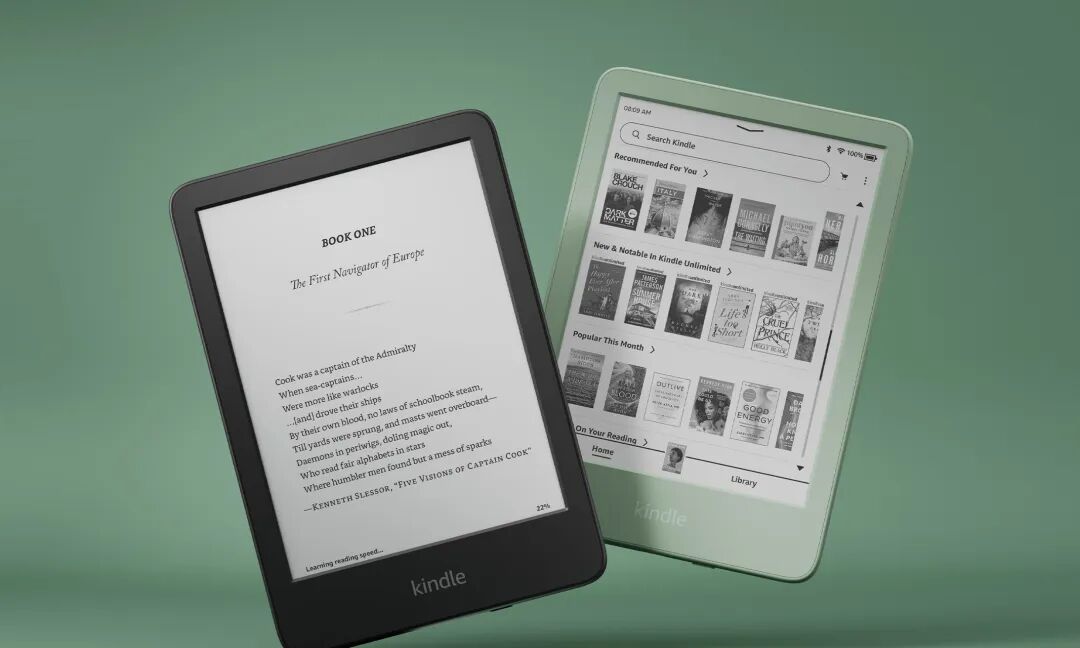
2024 年 6 月 30 日,亚马逊正式关闭 Kindle 中国云端下载服务。这一「拉闸」行为也被认为是 Kindle 退出中国市场的「最终章」。不过 Kindle 的离去并不意味着中国电子墨水屏阅读器市场的停滞,反而标志着国内墨水屏行业的「新生」。
图片来源:亚马逊
不同于 Kindle 时代那千篇一律的 6 英寸单色墨水屏,在「后 Kindle」时代,国内电子阅读器品牌的想象力得到了「解放」。在雷科技看来,光是产品形态上,「后 Kindle 时代」就进化出了三个不同的方向。
首先在产品形态上,电子屏阅读器早已不再局限于「书」的样子——P6+ 就是最好的例子。Kindle 那种矮胖的 6 英寸屏,放包里占位置,塞到裤兜里又担心把机子「压弯」,最后只好放在家里吃灰。而国产厂商直接把墨水屏做成手机比例,从根本上提高了墨水屏的「出勤率」,从而推动阅读习惯的改变。
图片来源:文石
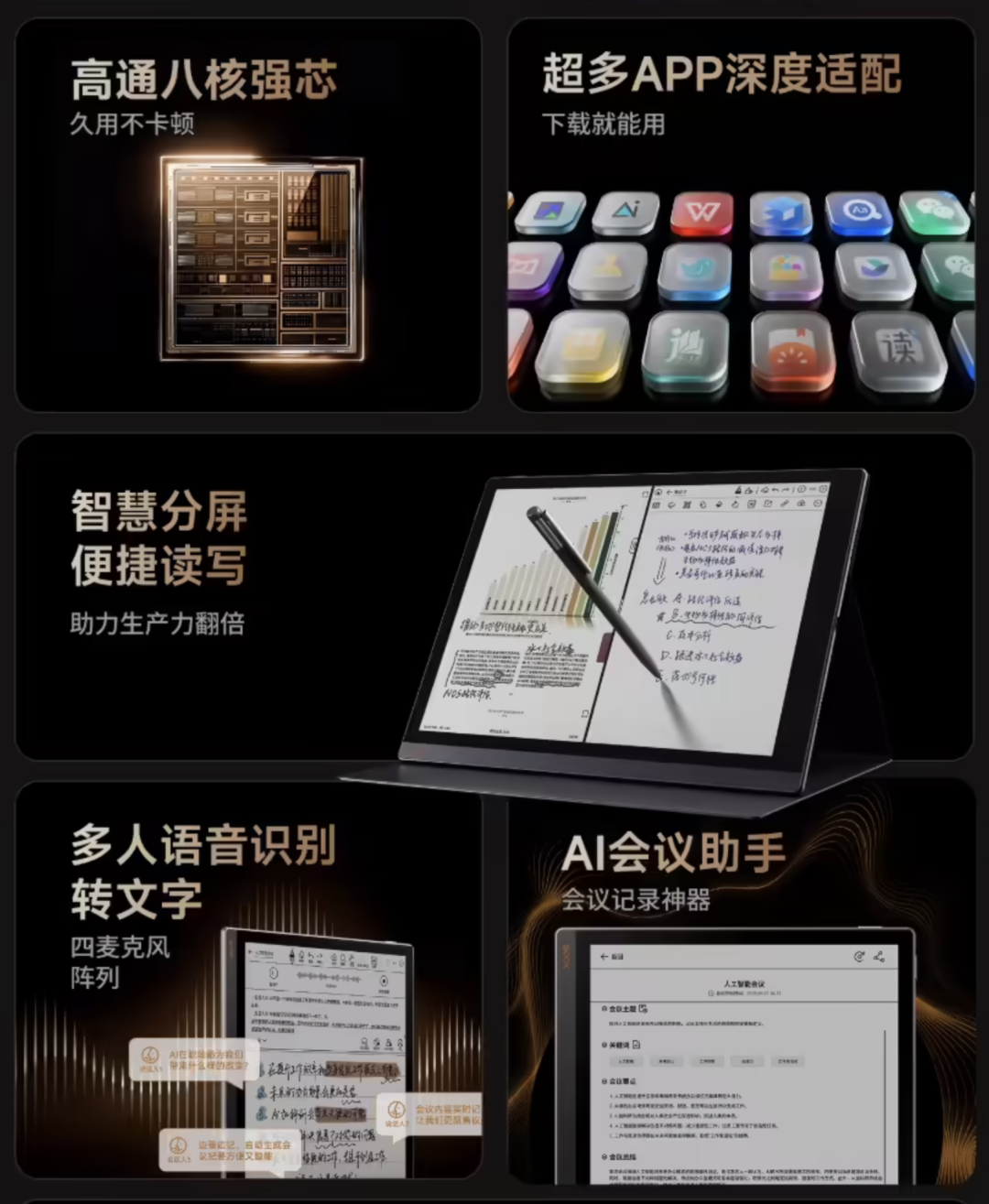
而在产品定位上,国内墨水屏阅读器也开始了「横向探索」,在深挖阅读场景之余,探索全新的使用场景。比如文石 T10C+ 就基于其「大屏+手写」的产品特性,成功开拓出了「智能会议」的全新用户场景。而新场景的引入甚至也让 T10C+ 吃上了 AI 智能体的红利,摇身一变成为了可以提升工作效率的 AI 硬件,获得了全新的身份。
国内墨水屏品牌普遍「欢迎」用户在设备上自行安装别的内容 App,让墨水屏阅读器从一个只能看书的「专用设备」,转型为可以看公众号、刷知乎的「通用设备」。这种开放的精神,在雷科技看来,才是国产品牌能把 Kindle「赶出」中国市场的秘诀。
On March 24th, BOOX, a company specializing in digital reading devices, released two new e-readers: the BOOX P6+ and the T10C+. The P6+ features a smartphone-like design with a 6.13-inch black-and-white e-ink screen, offering a pixel density of 300 PPI that matches typical paper books. Meanwhile, the T10C+ sports a traditional tablet form factor with a 10.3-inch color e-ink display.
In black-and-white mode, the T10C+ also boasts a pixel density of 300 PPI; however, due to the inherent limitations of the color e-ink technology, its density drops to 150 PPI in color mode.
Image source: BOOX
An interesting note about the new P6+ is that it borrows the active stylus from the P6 Pro's "Little Colored Horse" edition (sold separately) but omits the P6 Pro's camera, demonstrating a "give-and-take" approach to feature selection.
Whether it's the pocket-sized, portable P6+ or the larger, productivity-oriented T10C+ with its standard stylus, these devices prove a single point: when Amazon withdrew Kindle from the Chinese market, it wasn't because the reading environment in China was poor.
On June 30, 2024, Amazon officially shut down its Kindle cloud download service in China, marking the final step in Kindle's exit from the market. However, this departure has not stifled the growth of the Chinese e-reader market; rather, it has spurred significant innovation and "rebirth" within the industry.
Image source: Amazon
Unlike the era of uniform 6-inch monochrome Kindles, the post-Kindle landscape in China has seen a burst of creativity. In the view of Lei Technology, the market has evolved into three distinct directions regarding product form.
Firstly, e-readers are no longer confined to the shape of a book. The P6+ is a prime example of this trend. The cumbersome, short-and-wide 6-inch Kindle struggled to fit into pockets or bags, often winding up as a shelf ornament. Chinese manufacturers have addressed this by creating readers with smartphone proportions, significantly increasing the device's mobility and, consequently, the frequency of reading.
Image source: BOOX
Additionally, domestic brands are expanding the use cases for these devices. The BOOX T10C+, with its large screen and stylus support, is not just a reader but a tool for "smart meetings," leveraging its display capabilities for collaborative work. The integration of AI functionality further enhances its value as a productivity-boosting gadget.
What truly sets domestic brands apart is their open-source ideology. Unlike the closed ecosystem that locked Kindle users into the Amazon store, Chinese devices typically allow for the installation of third-party apps. This transforms the device from a specialized e-reader into a general platform for reading various content types, such as news or social media, which is the key factor in their success against Kindle.