
关于墨水屏的文章已经写了好几篇,介绍了不少Kindle、Kobo、文石、博阅等品牌的墨水屏产品。
今天先不聊具体的墨水屏了(主要是没刷到比较有意思的型号),我们来聊一聊墨水屏的发展历史。
电子纸的概念最早是由施乐帕洛阿尔托研究中心(Xerox PARC)的研究员尼克·谢里登(Nick Sheridon)在1970年代提出。当时,他发明了一种称为Gyricon的显示技术,也叫“扭转向球”。
其主要结构是数百万个直径与头发丝相当的小球,每个小球一半是黑色,带负电,另一半是白色,带正电;这些小球均匀的分布在两张透明硅胶薄片之间,同时,这里面还有油状液体,使得小球可以悬浮在其中,并能自由旋转。
通过屏幕下方电极矩阵,可以控制不同小球上下旋转,进而显示黑白图像;在断电时,小球仍会保持在原位。

图片由AI生成
在当时,Gyricon技术就展现出了电子纸的独特优势:
1、类纸体验:完全依靠环境光的反射,没有背光,也就没有蓝光辐射,护眼效果好;
2、超低功耗:仅在翻页或刷新时需要电能,静态显示时几乎零功耗;
3、可弯曲性:因为微型小球都是悬浮在柔性硅胶中,所以可以弯曲;
尽管Gyricon的概念很好,但是在制造工艺上却十分困难:
首先,数百万个小球的均匀性就很难保证,就算制造出来,如何将它们均匀封装在硅橡胶片中又是一个难题;
此外,这种技术注定导致电子纸的刷新率低,分辨率也因小球直径而受限制。最终,这一技术没能实现商业化。
1993年,麻省理工学院媒体实验室的约瑟夫·雅各布森(Joseph Jacobson)等人开始研究微胶囊电泳技术,也就是我们熟知的E Ink技术。
它与之前的Gyricon有些类似,也是依靠电极施加电压驱动带正(负)电荷的颜色粒子上下运动,进而呈现画面文字。
不过,E Ink技术将Gyricon技术中的小球换成了直径更小一些的微胶囊,每个微胶囊中充满了透明的介电液体,液体中悬浮着两种带有相反电荷的颜料粒子。
通过控制电压的大小和持续时间,可以让部分白色和部分黑色粒子同时停留在顶部,或者处于中间位置,从而混合出不同深浅的灰色。
相较于Gyricon技术,E Ink技术的制造工艺更加简单,可以将微胶囊制成油墨,然后涂布再柔性衬底上。
此外,因为微胶囊和其内部的颜色粒子可以做得更小,E Ink技术能够实现更高的分辨率,显示效果更强。
在1997年,雅各布森联合创立了E Ink公司(元太科技的前身合作伙伴),致力于将微胶囊电子墨水商业化。
墨水屏电子书的时代开启于1998年,NuvoMedia在老牌书店Barnes & Noble的支持下推出了Rocket eBook。稍晚了几个月,Softbook也发布了一款类似的设备。
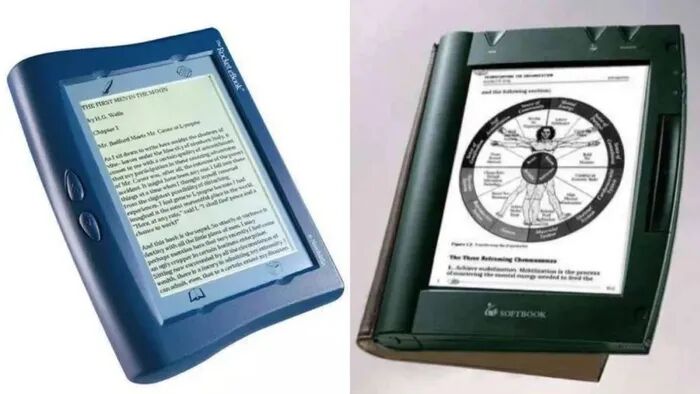
左图:Rocket eBook,右图:Softbook
到了2004年4月,索尼和E Ink合作,推出了全球首款商用墨水屏——Sony Librie。它使用了6英寸的E Ink Vizplex屏幕,分辨率仅为800x600(约170 PPI),显示4级灰度。
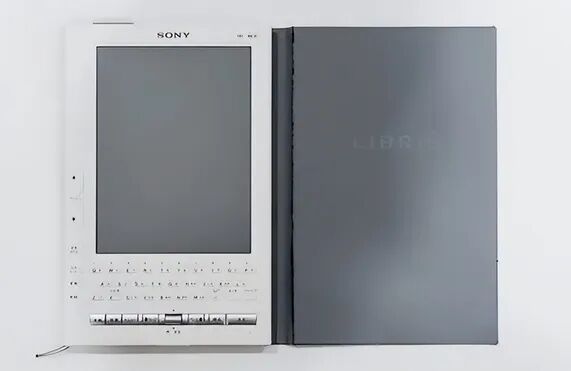
不过因为缺乏便捷的配套服务,例如购买电子书、书籍格式、无线传输等,索尼的电子墨水屏销售算不上成功。
2007年,亚马逊入局墨水屏市场,彻底改变了游戏规则,开始了“硬件+内容+服务”的模式。
这年11月,Kindle一代发布,它内置了Sprint EVDO网络,可以直接在设备上购买并下载书籍,大大方便了用户的操作;同时,背靠亚马逊庞大的图书资源,首发就有9万本书籍。
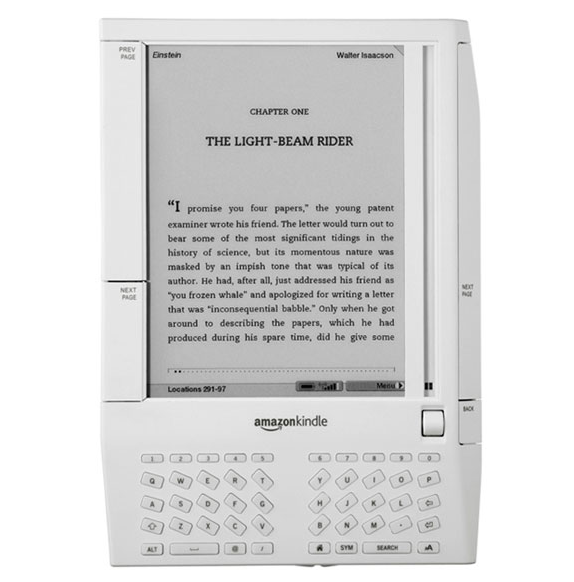
Kindle一代采用6英寸E Ink屏幕,4级灰度,物理全键盘设计。首发价格达到399美元,虽然昂贵,但在上市5.5小时就售罄了。直到现在,还有许多墨水屏爱好者想要收集这款电子书,我自己也想淘一台玩玩,但是现在很难遇到了。
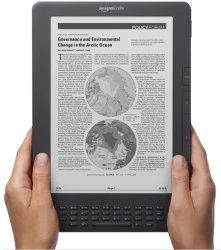
之后,Kindle又推出了K2、K3、9.7寸大屏的DX和DXG。在2011年,亚马逊推出了Kindle Touch,首次引入红外触控技术,取消了物理键盘,价格也大大降低,极大的推动了墨水屏的普及。
在这期间,索尼也推出了触控板的Reader系列,现在还时不时地刷到别人分享Sony的老机子。此外,美国最大的实体书店Barnes & Noble也推出了自家的墨水屏阅读器——NOOK,采用安卓系统。
次年,也就是2012年,亚马逊推出了Kindle Paperwhite一代,这是第一款内置前光(Front-light,即在屏幕前加了一层导光板,并在阅读器底部加上LED灯珠,不过大家习惯成为背光)的墨水屏,这使得墨水屏可以不依赖环境光,夜晚阅读也成为可能。
此后,背光成了中高端阅读器的标配。不过,近年来,有些厂家为了追求极致的显示,又开始尝试去掉导光层,甚至是触控层,例如汉王的N10系列。
之后,墨水屏的屏幕分辨率也逐渐提升。在2014年,亚马逊发布了首款旗舰机型——Kindle Voyage,分辨率首次达到300 PPI(视网膜级别),采用玻璃盖板和纯平屏幕设计,并引入压感翻页键,代表了当时的最高工艺水平。

直到现在,KV依然受到很多人的喜爱,被称为一代机皇。我手头就有一台,虽然使用频率不高,但是每次拿在手里还是会感叹它的精致,不舍得出掉。
2015,亚马逊将300 PPI的配置下放给了中端主力机——Kindle Paperwhite 3,成为行业新标准。
与此同时,其他墨水屏厂商也纷纷加入“战场”。
加拿大乐天旗下的Kobo在这一时期迅速崛起,推出了Aura H2O(我一直想收一台)等产品;国产品牌,如掌阅、文石、汉王等,也开始发力,文石率先尝试开放安卓系统,允许安装第三方应用。
之后,墨水屏市场细分加剧,阅读器不再仅限于看书,开始向笔记、办公和彩色阅读扩展。
不过,我个人觉得,墨水屏作为一个阅读器,功能多了反而会让人分心,正如亚马逊创始人贝索斯所说:“最好的设备就是专门用来读书的设备”,至于看视频,刷流媒体等功能,还是交给手机平板等电子设备吧。
PS:部分图片来自网络,可侵删。
The first Kindle was a hit, selling out within 5.5 hours of launch.
Since then, the Kindle has been constantly evolving. The screen has gone from black-and-white to color, the resolution has increased from 600x800 to 1680x3000, and the frame rate has risen from just a few Hz to over 120 Hz.
Although the market share is currently dominated by Kindle, it's not the only player.
In 2006, Canadian company Bookeen launched the Cybook Gen1, which was the first mass-produced e-reader in Europe.
Around the same time, a few other brands entered the market:
iRex: A Dutch company that initially collaborated with Philips. They developed some unique devices, such as the iRex iLiad in 2006, which was one of the first e-readers to support handwritten notes.
However, iRex struggled with poor product reliability and high prices, eventually declaring bankruptcy in 2010.
Kobo: A subsidiary of Rakuten, founded in 2009. It has grown to become the second-largest e-reader brand after Amazon, especially strong in the European and Japanese markets.
Barnes & Noble: Released the Nook in 2009, competing directly with the Kindle. In 2012, the Nook HD tablet was launched, which used a TFT LCD screen rather than an e-ink display.
Sony: Released the PRS-500 in 2006, which was one of the first commercial e-readers to fully utilize the advantages of e-ink displays.
However, Sony failed to establish a strong ecosystem and distribution channels for e-reader content, eventually exiting the hardware market in 2014.
While the Kindle is ubiquitous, the Chinese market has seen the rise of several domestic brands, such as Wenstone (文石) and Bo Yue (博阅), which have gained significant market share.
The development of e-readers has been a long journey, filled with the efforts of visionaries and the struggles of inventors.
It has taken over 20 years to go from a conceptual "Gyricon" toy to mainstream products with high resolution, fast response times, and color displays.
Although e-readers have carved out a niche in the tech world, they are still far from replacing traditional paper books. For now, they exist side-by-side, each serving a slightly different purpose.
In 1997, Jacobson co-founded E Ink (the predecessor partner of Primeview), aiming to commercialize micro-capsule electronic ink.
The era of e-ink e-books began in 1998, when NuvoMedia launched the Rocket eBook with the support of the old-brand bookstore Barnes & Noble. A few months later, Softbook also released a similar device.
左图:Rocket eBook,右图:Softbook
By April 2004, Sony and E Ink collaborated to launch the world's first commercial e-ink screen — the Sony Librie. It used a 6-inch E Ink Vizplex screen with a resolution of only 800×600 (approx. 170 PPI), displaying 4 levels of grayscale.
However, due to the lack of convenient supporting services such as e-book purchasing, book formats, and wireless transmission, the sales of Sony's e-ink screen were not very successful.
In 2007, Amazon entered the e-ink market, completely changing the game and starting the "hardware + content + service" model.
In November that year, the first-generation Kindle was released. It built-in the Sprint EVDO network, allowing direct purchase and download of books on the device, greatly facilitating user operations; at the same time, backed by Amazon's massive book resources, there were 90,000 books available at launch.
The first-generation Kindle features a 6-inch E Ink screen with 4 levels of grayscale and a physical full keyboard. The initial price was set at $399, which is quite expensive, but it still sold out within 5.5 hours of its release. Even now, many E-ink enthusiasts are eager to collect this classic e-reader, and I too wish to acquire one to play with, but it's become very rare to find.
Subsequently, Kindle launched the K2, K3, and the 9.7-inch large-screen DX and DXG. In 2011, Amazon introduced the Kindle Touch, which first adopted infrared touch technology and removed the physical keyboard, significantly reducing the price and largely promoting the popularization of e-ink screens.
During this period, Sony also released its own touch-screen Reader series, which I still see people sharing their old Sony devices online from time to time. Additionally, the largest physical bookstore in the United States, Barnes & Noble, launched its own e-ink reader, the NOOK, which runs on the Android system.
The following year, in 2012, Amazon introduced the first-generation Kindle Paperwhite, the first e-ink screen to incorporate a front-light (placing a light guide plate in front of the screen and adding LED beads at the bottom, though people often refer to it as a backlight). This innovation allowed e-ink screens to function independently of ambient light, making nighttime reading possible.
Since then, the front-light has become a standard feature for mid-to-high-end readers. However, in recent years, some manufacturers have begun to remove the light guide layer or even the touch layer in pursuit of the ultimate display quality, such as Hanwang's N10 series.
Furthermore, the resolution of e-ink screens has gradually increased. In 2014, Amazon released its first flagship model, the Kindle Voyage, with a resolution reaching 300 PPI (retina level) for the first time. It features a glass cover and a flush screen design, along with pressure-sensitive page-turning buttons, representing the pinnacle of craftsmanship at that time.
Today, the KV remains highly loved by many and is regarded as a classic. I own one myself; although it isn't used frequently, I always marvel at its exquisiteness whenever I hold it, making it impossible for me to part with it.
In 2015, Amazon extended the 300 PPI configuration to its mid-range main model, the Kindle Paperwhite 3, establishing a new industry standard.
Meanwhile, other e-ink manufacturers were also entering the "battlefield."
Canada's Rakuten-owned Kobo rose rapidly during this period, launching products like the Aura H2O (a model I've always wanted to own); Chinese brands such as Zhangyue, Boox, and Hanwang also began to make their marks, with Boox leading the way in experimenting with an open Android system that allows for the installation of third-party apps.
Later, the e-ink market became increasingly specialized, with readers expanding beyond mere book reading to include note-taking, office work, and color reading.
Personally, I believe that as a reader, an e-ink device should remain simple. Too many features can distract from the primary goal of reading, as Amazon's founder Bezos stated: "The best device is one specifically for reading." For watching videos or streaming media, we can leave that to smartphones and tablets.
P.S.: Some images are sourced from the internet; please feel free to remove them if they infringe on your rights.