
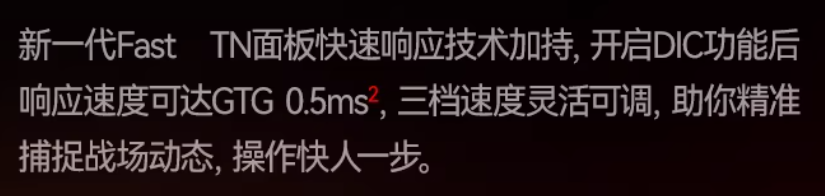
扭曲向列型面板。就是当液晶分子通电时,它们在两块玻璃板之间实际上发生了 90 度的扭曲。光线穿过液晶层和偏振滤光片,从而激活屏幕上的像素。红色、蓝色和绿色像素以子像素阵列的形式排列,并通过调节各自的亮度进行混合,最终呈现出所需的像素颜色。

-
原理:结构简单,液晶分子在电压作用下扭曲或直立,如同快速开合的阀门;
-
优势:由于灰阶变化少,分子偏转路径短,因此响应时间极快;
-
色彩:早期的TN面板是6bit,只能显示约16.2M色(通过抖动算法),色彩单薄。不过,现在的TN面板配合8bit驱动IC也能实现16.7M色,但整体色彩还原能力仍不及VA和IPS 。
-
应用:电竞领域显示器,特点入门级、高刷新率;
-
缺点:可视角度窄,侧面观看有水波纹,色彩表现一般;
-
软硬属性:软屏,轻划有水波纹。
|
|

-
原理:电极位于同一平面,产生的是水平电场,驱动液晶分子在平面内旋转。这种设计使得液晶分子始终与玻璃基板平行,因此从任何角度观看,光的透过率都相对一致,实现了极佳的可视角度 。
-
优势:超广视角,色彩很好。
-
色彩:IPS面板的色彩还原准确性也很高,因此是专业设计领域的首选。
-
应用:专业设计/内容创作;医疗诊断,细节显示。
-
缺点:漏光,纯黑背景,屏幕四周有光线渗出;
-
软硬属性:由于其“硬屏”特性,也特别适合有触摸功能的设备 。
使用IPS面板显示屏描述:


-
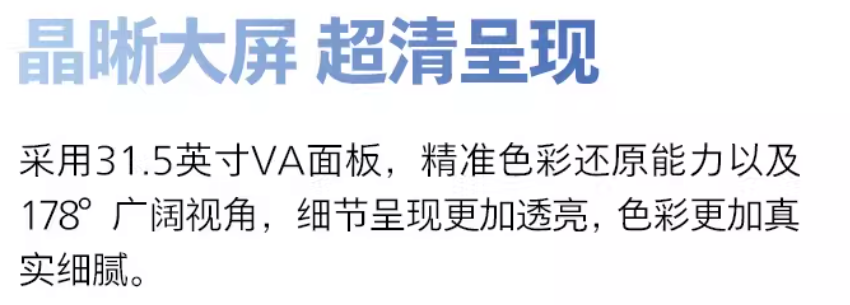
原理:未通电时,液晶分子垂直排列,光线几乎无法通过,因此能实现极深的黑色和超高对比度(原生对比度可达3000:1以上),这是它最大的视觉优势。
-
优势:色彩的对比度超高,画面层次感强。
-
色彩:优秀(色彩饱满),视觉冲击力强。
-
应用:家庭影院以及曲面屏使用。
-
缺点:响应时间较长,容易显示拖影;
-
软硬属性:由于其“软屏”特性,按压有梅花纹 。
-
原理:属于是IPS技术的进阶版本;ADS的核心在于其独特的“高级超维场转换技术”驱动方式,可以更精确地控制液晶分子,从而在实现超广视角(178°)的同时,大幅提升了透光效率,具备护眼、低碳特性 。
-
特点:京东方(BOE)是ADS技术的主要推动者。其最新技术“ADS Pro”,通过降低表面反射率(从常规5%降至1.1%),在真实环境光下的对比度表现远超传统IPS ,且较低的功耗。
-
原理:PVA还是属于VA阵营,属于改良版;其最大特点是通过上下两层玻璃基板上精心设计的ITO电极缝隙,形成一个倾斜的电场,使液晶分子在多个方向上倾倒,从而实现广视角 。
-
特点:PVA技术的核心优势是原生对比度极高,通常可达3000:1以上,能呈现出深邃的黑色和通透的画面,非常适合观看电影和需要高静态对比度的专业应用 。其改良版本S-PVA在响应时间和可视角度上已与现代IPS技术水平相当。
TN(Twisted Nematic)面板 Twisted Nematic panel. When a voltage is applied to the liquid crystal molecules, they effectively twist by 90 degrees between two glass plates. Light passes through the liquid crystal layer and the polarizing filter, activating the pixels on the screen. Red, blue, and green pixels are arranged in a sub-pixel array and mixed by adjusting their respective brightness to create the final pixel color.
Twisted Nematic (TN) Panel. When voltage is applied, the liquid crystal molecules actually twist by 90 degrees between the two glass plates. Light passes through the liquid crystal layer and the polarizing filter, activating the pixels on the screen. The red, blue, and green pixels are arranged in a sub-pixel array and mixed by adjusting their respective brightness to produce the final pixel color.
Principle: The structure is simple. Liquid crystal molecules twist or straighten under voltage, acting like a quickly opened or closed valve.
Advantage: Since there is a small number of grayscale transitions, the molecular rotation path is short, resulting in extremely fast response time.
Color: Early TN panels had 6 bits and could only display about 16.2 million colors (via dithering), making the colors thin. However, current TN panels with 8-bit driver ICs can achieve 16.7 million colors, but the overall color reproduction remains inferior to VA and IPS.
Application: Entry-level monitors in e-sports, characterized by high refresh rates.
Disadvantage: Narrow viewing angle. Viewing from the side results in a water ripple effect, and the color performance is poor.
Hard/Soft: Soft screen. Light scratches cause a water ripple pattern.
Description of a display using a TN panel.
Grey To Grey (灰阶到灰阶); Grey To Grey (G2G);
GTG (Gray-to-Gray): One of the most important dynamic indicators for monitors.
It measures the time required for a liquid crystal pixel to switch from one brightness level (gray scale) to another, in milliseconds (ms).
A lower GTG response time indicates better dynamic clarity.
2.IPS(IN Plane Switching displays)面板 2. IPS (In-Plane Switching) Panel
In-Plane Switching (IPS) Panel. This refers to liquid crystal molecules that remain aligned parallel to the two glass panels even when voltage is applied. The reason behind this technology (and why this alignment is better than twisting) is highly complex.
Principle: The electrodes are in the same plane, creating a horizontal electric field that rotates the liquid crystal molecules within the plane. Because the molecules remain parallel to the glass substrate, the light transmittance is consistent regardless of the viewing angle, resulting in an excellent viewing angle.
Advantage: Ultra-wide viewing angle and excellent color quality.
Color: IPS panels are known for high color reproduction accuracy, making them a favorite in professional design fields.
Application: Professional design/content creation; medical diagnosis, where detail is critical.
Disadvantage: Bleeding. Light leaks from the edges of the screen on a pure black background.
Hard/Soft: Due to its "hard screen" nature, it is particularly suitable for touch-enabled devices.
Description of a display using an IPS panel.
3.VA(Vertical Alignment Panels)面板 3. VA (Vertical Alignment) Panel
Vertical Alignment (VA) Panel. The liquid crystal molecules are arranged perpendicular to the substrate (hence "Vertical Alignment"). In this state, the molecules block most of the backlight, giving VA panels a very high contrast ratio and deep black levels. When voltage is applied, the molecules tilt, moving toward a parallel alignment with the glass (i.e., vertical to their current state), allowing light to pass through and creating the visible image.
Principle: When uncharged, the molecules are vertical, preventing light from passing through, which achieves a very deep black and a high contrast ratio (native contrast > 3000:1). This is its biggest visual advantage.
Advantage: High color contrast and strong image depth.
Color: Excellent (rich saturation), providing a strong visual impact.
Application: Home theaters and curved screens.
Disadvantage: Slower response time, which can lead to motion blur.
Hard/Soft: Because of its "soft screen" characteristics, pressing on the panel can create a distinct "plumeria" pattern.
Description of a display using a VA panel.
Below are descriptions of improved versions of these display panel technologies. The fundamental categories remain the same: TN, IPS, and VA.
ADS (Advanced Super Dimension Switch)-BOE(京东方) ADS (Advanced Super Dimension Switch) - BOE
Principle: This is an advanced version of IPS technology. ADS uses a unique "advanced super-dimensional field conversion" drive method, allowing for more precise control of liquid crystal molecules. This achieves an ultra-wide viewing angle (178°) while significantly improving light transmission efficiency, offering eye-protection and low-carbon benefits.
Feature: BOE (Beijing Oriental Electronics) is the primary proponent of ADS technology. Their latest iteration, "ADS Pro", reduces surface reflectivity from 5% to 1.1%, resulting in a contrast ratio that outperforms traditional IPS under real ambient light, with lower power consumption.
PVA (Patterned Vertical Alignment)-三星 PVA (Patterned Vertical Alignment) - Samsung
Principle: PVA remains in the VA family and is an improved version. Its key feature is the use of a tilted electric field created by carefully designed ITO electrode slots on the upper and lower glass substrates. This causes the liquid crystal molecules to tilt in multiple directions, achieving a wide viewing angle.
Feature: The core advantage of PVA technology is its extremely high native contrast ratio, typically exceeding 3000:1. It can display deep blacks and transparent images, making it suitable for movies and professional applications requiring high static contrast. The S-PVA version has further improved response time and viewing angle to match the standards of modern IPS technology.
PLS (Plane to Line Switching)-三星 PLS (Plane to Line Switching) - Samsung
Principle: PLS aims to combine the wide viewing angle of IPS with the high transmittance of VA. While the pixel arrangement is similar to IPS, the drive method is more complex, utilizing a collaborative effect of vertical and horizontal electric fields to achieve better overall performance. However, commercially available products are rare; Samsung released one early on, but the effect was poor, and it is rarely seen in domestic markets.
#IPS #TN #VA #显示器 #IPS #TN #VA #DisplayMonitor