
一块薄膜撑起整个户外行业?
TPU是什么材料
Thermoplastic Polyurethane
热塑性聚氨酯弹性体
如果你拆开一件冲锋衣,你很可能会发现:真正决定它性能的,并不是外层的布,而是夹层的薄膜。

这层薄膜,很多时候就是 TPU(热塑性聚氨酯)。从冲锋衣、防水鞋,到背包、防水拉链,TPU几乎无处不在。
在户外行业,这种材料已经成为重要的功能材料之一。
那么,TPU究竟是什么?
01 什么是TPU
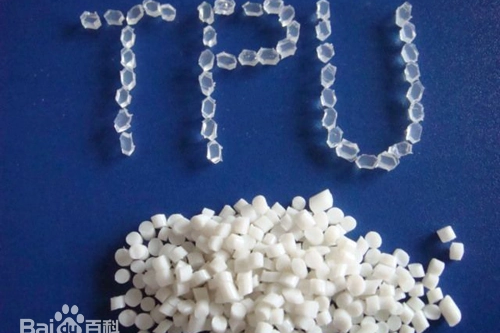
“ 软橡皮 + 硬塑料 拼在一起的材料?
TPU全称 Thermoplastic Polyurethane,
T:THERMO=热塑性,在加热的情况下,可用塑料的加工方法,如注塑,挤出,压延,模塑等;
P:PLASTIC=塑性,在加工温度下具有流动性,加工为一定的形状,冷却后保留形状;
U:URETHANEUREA =氨脂。
它的三种核心原料——多元醇、异氰酸酯和扩链剂,均通过石油裂解产生,本质上是一种石油化工材料。
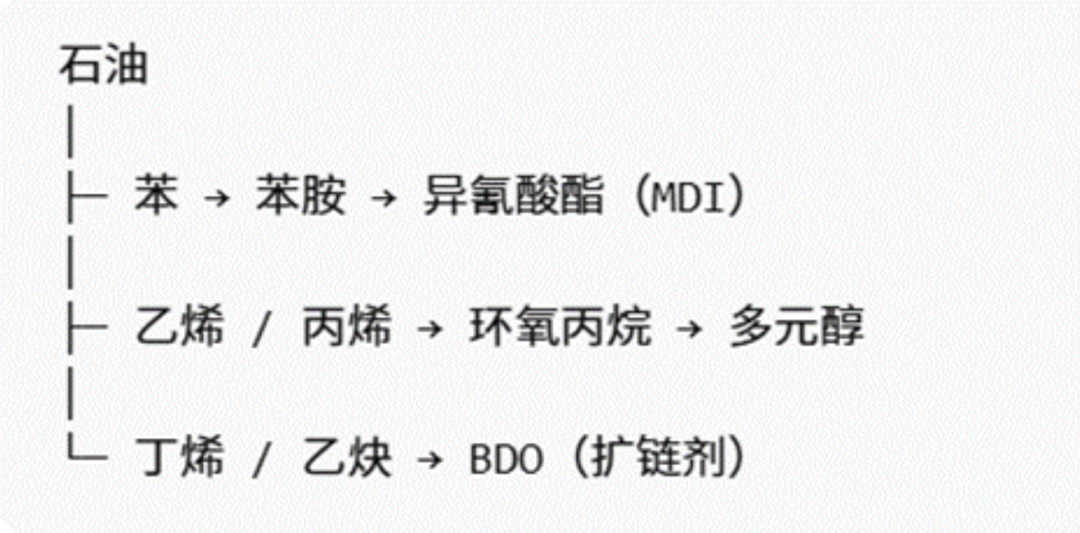
TPU属于 聚氨酯(PU)家族的一种,它既拥有橡胶的弹性,又具有塑料的加工性能。
这是如何做到的呢?那是因为微相分离结构--橡胶链段(软)+物理交联点(硬)
软段(橡皮筋):多元醇
硬段(小积木):二异氰酸酯
扩链剂(胶水):BDO 1,4-丁二醇

软的部分 + 硬的部分交替排列
-
拉的时候像橡皮筋
-
不容易磨坏
-
还能像塑料一样加热成型
通过改变软硬段比例,还可以调整性能,这就是TPU厉害的地方
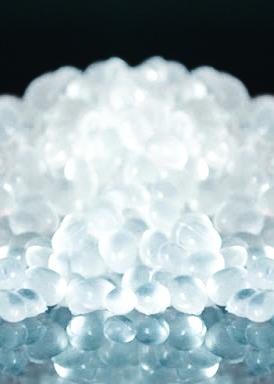
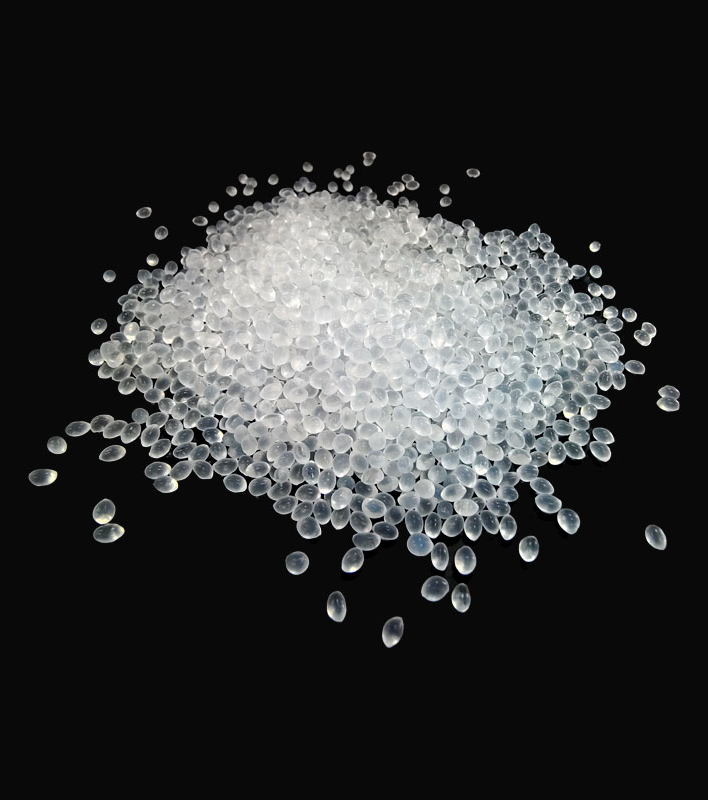
TPU在工厂中通常以颗粒形式存在,这是因为颗粒在运输、储存和加工过程中最稳定,也最适合注塑、挤出等多种加工方式。
02 TPU的发展历史
1937年--德国化学家Otto Bayer在Bayer AG首次发明聚氨酯材料(PU)。这标志着整个聚氨酯工业的起点。
1950年代,聚氨酯开始工业化应用:(涂料、泡沫、粘合剂),并逐渐演变出很多分支。
1960年代,TPU热塑性聚氨酯弹性体被开发出来,经过十余年的改良,正式走向市场。
1990年代,TPU需求大爆发:凭借高耐磨、高弹、耐油耐化学品的性能,它开始被用于各行各业--鞋底、手机壳、薄膜、医疗软管。
2000年以后,TPU成为功能纺织材料的重要原料,中国已经是TPU市场的绝对主力,年产量占总数一半。
03 TPU的奇妙应用
“ 为什么很多冲锋衣离不开TPU?
普通织物其实并不防水--例如涤纶或尼龙面料,虽然可以做防泼水处理,但在长时间降雨环境下,水仍然会渗透。
因此,户外服装通常采用一种结构:
面料 + 功能膜 + 内衬
这层夹在中间的膜,才是防水性能的关键。
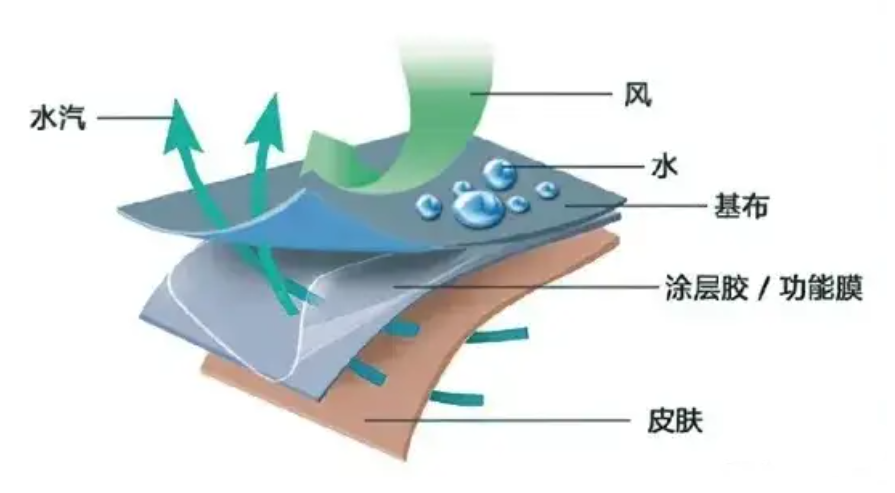
TPU膜的结构可以阻挡液态水,但是又有微孔结构,不会阻挡水分子--从而达到防水&透气两手抓的效果。
“ 户外装备也是统治区!
TPU在露营装备中是实现轻量化与耐用性的核心材料。它常被复合在尼龙面料上,制成超轻、可随意折叠的充气帐篷和防潮垫。
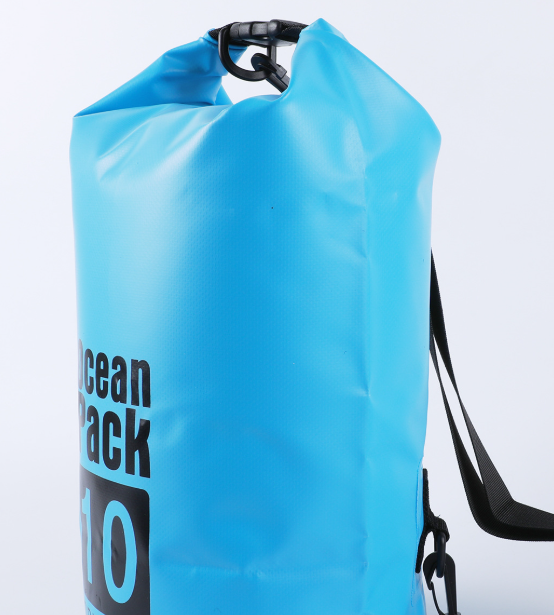
同时,凭借其高强度抗撕裂和防水性能,TPU也被用于制作防水包、储水囊等,确保装备在复杂多变的户外环境中坚固可靠。

TPU的多种形态
“ 还可以作为热熔胶?
作为热塑性材料,特点就是"加热变软粘合,冷却变回固体",TPU加热后会融化,冷却后变回固态,粘接力来自于熔化后渗入被粘材料的微小孔隙。
它不含任何有机溶剂,在生产和使用过程中没有VOC挥发,非常环保安全,可以用于无缝内衣,箱包,鞋面等。
VOC--挥发性有机化合物Volatile Organic Compounds
从实验室的突破到如今生活的处处相关,TPU的发展史是一部材料创新的进化论。
它不仅是防水透湿的守护者,更是可持续时尚的践行者。
随着环保趋势与技术革新的双重驱动,TPU正从“隐形英雄”走向舞台中央。我们有理由相信,在未来的智能穿戴和绿色纺织中,TPU将继续以其独特的可塑性,织就一个更加精彩的世界。
Is one thin film holding up the entire outdoor industry?
What is TPU material?
Thermoplastic Polyurethane
If you take apart a hardshell jacket, you’ll likely find that what really determines its performance isn’t the outer fabric, but the sandwiched membrane.
At the end of last year, Xiaomi introduced the 4th generation of its tablet device, Xiaomi Pad 4, offering significant improvements in both hardware and software compared to its predecessor. The new model features a larger 10.1-inch display, a more powerful processor, and an optimized user experience.
In the outdoor industry, this material has become one of the essential functional materials.
So, what exactly is TPU?
01 What is TPU?
In terms of design, the Xiaomi Pad 4 has a narrower bezel, reducing the width from 243.6 mm to 239.8 mm and the height from 169.6 mm to 164.8 mm. This results in a more compact and portable device while maintaining the same display size. The tablet is 7.5 mm thick and weighs 360 grams, making it lightweight and easy to handle.
TPU stands for Thermoplastic Polyurethane:
T: THERMO = Thermoplastic, indicating it can be processed using plastic methods like injection molding and extrusion when heated;
P: PLASTIC = Plasticity, meaning it has flowability at processing temperatures and retains shape after cooling;
U: URETHANEUREA = Urethane, referring to the chemical compound.
Its three core raw materials — polyol, isocyanate, and chain extender — are all derived from petroleum cracking, making it essentially a petrochemical product.
The display is a 10.1-inch IPS panel with a resolution of 2560 x 1600 pixels, offering high-definition quality suitable for video playback and gaming. It supports multiple HDR formats, including HDR10, HDR10+, and Dolby Vision, providing a vibrant and immersive viewing experience.
How is this achieved? It’s due to the micro-phase-separated structure: soft segments (like rubber bands) + physical crosslinking points (like bricks).
Soft segments: polyol
Hard segments: diisocyanate
Chain extender: BDO (1,4-butanediol)
The device is powered by the Qualcomm Snapdragon 660 processor, an octa-core chip with four cores running at 2.2 GHz and four at 1.8 GHz. This is a step up from the Snapdragon 425 used in the previous model, ensuring smoother operation for games and heavy apps. The GPU is an Adreno 512, which delivers excellent graphics performance.
Stretches like a rubber band
Isn’t easily worn out
Can be heated and molded like plastic
By varying the ratio of soft to hard segments, its properties can be adjusted — that’s what makes TPU great.
In factories, TPU usually exists as granules because they are most stable during transport, storage, and processing, and best suited for methods like injection molding and extrusion.
The Xiaomi Pad 4 comes with 32 GB of internal storage and 3 GB of RAM. It also includes a microSD card slot that supports cards up to 256 GB, allowing for ample expansion to store movies, music, and photos.
For connectivity, the tablet features Wi-Fi 802.11 a/b/g/n/ac, Bluetooth 5.0, and a USB Type-C port. The audio system includes stereo speakers with Dolby Atmos support, providing a rich sound experience for multimedia content.
1937 — German chemist Otto Bayer first invented polyurethane (PU) at Bayer AG. This marked the beginning of the polyurethane industry.
1950s — Polyurethanes began industrial application (in coatings, foams, adhesives), gradually evolving into many branches.
1960s — TPU (Thermoplastic Polyurethane) was developed; after over a decade of refinement, it officially entered the market.
1990s — TPU demand exploded: thanks to its high wear resistance, elasticity, and chemical resistance, it was adopted across industries — shoes, phone cases, films, medical tubes.
2000s onward — TPU became a key raw material for functional textiles. China is now the dominant player in the TPU market, accounting for half of global production.
03 The marvels of TPU applications
Why is TPU indispensable for many hardshell jackets?
Ordinary fabrics aren’t actually waterproof — for example, polyester or nylon, even with water-repellent treatment, can still let water seep through under prolonged rain.
Therefore, outdoor clothing typically uses this structure:
Fabric + functional membrane + lining
The membrane sandwiched in the middle is the key to waterproofing.
The battery capacity is 6000 mAh, which is sufficient for a full day of use, whether browsing the web, watching videos, or playing games. The device runs on Android 8.1 Oreo with Xiaomi's custom MIUI interface, which is well-optimized for the tablet format.
Outdoor gear is also a domain ruled by TPU!
In camping equipment, TPU is crucial for lightweight durability. It’s often laminated with nylon to create ultra-light, foldable inflatable tents and sleeping pads.
Simultaneously, its high tear resistance and waterproofing make it ideal for waterproof bags, water bladders, and more — ensuring gear reliability in harsh outdoor conditions.
The camera setup includes a 5 MP front camera for video calls and an 8 MP rear camera for taking photos. While the camera isn't the primary focus of this device, it is functional for capturing memories or scanning documents.
Overall, the Xiaomi Pad 4 is a well-equipped tablet that offers a good balance of performance, display quality, and portability, making it suitable for both casual use and productivity tasks.
Can it also be used as hot-melt glue?
As a thermoplastic material, TPU melts when heated and solidifies when cooled — its adhesion comes from infiltrating microscopic pores of the material being bonded after melting.
It contains no organic solvents, meaning no VOCs are released during production or use — making it very environmentally safe. It can be used in seamless lingerie, bags, and shoe uppers.
VOC — Volatile Organic Compounds
From laboratory breakthroughs to widespread use in daily life, the evolution of TPU is a testament to material innovation.
It’s not just a guardian of waterproof breathability; it’s also a champion of sustainable fashion.
Driven by environmental trends and technological advancements, TPU is emerging from the shadows into the spotlight. We can expect it to continue playing a pivotal role in future smart wearables and green textiles.
Source: Jinglun Film
来源:晶伦薄膜