
原文链接:https://mp.weixin.qq.com/s/BYvb04MtEoRK-tiax-GCvg
全球人工智能技术的突破性发展正引发前所未见的能源危机。元太科技董事长李政昊在台湾地区一场演讲中指出,当前科技产业过度聚焦于运算能力的提升,却忽略了能源枯竭的严峻现实。未来的显示技术不应再盲目追求更高亮度与鲜艳色彩,而是必须转向极低耗能且无光害的表面显示。而电子纸凭借其不发光与极度省电的特性,不仅能大幅降低全球电网负担,更成为推动全球可持续发展与因应AI庞大耗电量的关键解方。
随着各界对AI的期待日益升高,其背后隐藏的庞大耗电量已成为不容忽视的隐患。台湾显示器产业联合总会(TDUA)近日举办的「跨域先进面板级科技应用趋势论坛」,李政昊在演讲中引用惊人的数据指出,光是在未来三年内,全球AI发展所需的耗电量就相当于德国一整年的总用电量,若进一步将时间轴拉长至2031年,AI的耗电量更将飙升至等同于耗电大国日本的全国总用电量。面对此一趋势,李政昊直言科技发展的底层逻辑已经改变,关键不再是1奈米或2奈米等先进制程的竞争,也不是封装技术的突破,而是能源的取得与分配。以台湾为例,台积电等晶圆代工厂目前已消耗全台湾地区20%的电力,未来加上即将建置的大型数据中心与新一代晶圆厂,电力短缺将成为无可避免的现实。若无法在其他领域有效节能,人类的科技发展甚至可能因缺电而退化回石器时代。

过去十年来,显示器产业将高达八成至九成的产能投入于智能型手机、电视、平板计算机与车用显示器等装置,并不断在LCD、OLED到Micro LED等技术中竞逐更高的亮度与更快的更新率。然而,这些直射光线的屏幕不仅极度耗电,更是造成现代人头痛与眼睛疲劳的元凶。为了解决这场迫在眉睫的能源危机,元太科技提出了颠覆传统显示器产业的全新思维。李政昊认为,显示器的未来根本不应局限于方正的发光装置,而是将信息无缝融入人们周遭的表面。元太科技坚持发展如同纸张般透过环境光反射来呈现影像的技术,因为不发光的表面在实体世界中占据了最大的面积,这才是显示科技能够真正普及且不造成能源与视觉负担的最佳途径。
电子纸的节能优势
电子纸的节能效益在实际应用中展现出压倒性的优势。根据估算,将100个甚至120个传统发光广告牌替换为电子纸广告牌,其耗电量仅相当于运作一个传统广告牌。这项优势让元太科技从未锁定与传统LCD竞争消费性电子市场,而是致力于取代传统纸张,并将应用范围扩展至零售、交通与建筑等多元领域。在零售市场,元太科技已协助沃尔玛等大型量贩店全面导入电子货架卷标,并在2025年更创下全球高达5亿个标签的总销量。在交通领域,电子纸显示器能在缺乏电网支持的极端情况下,完全仰赖太阳能板维持运作,成为断电时唯一可靠的信息来源。此外,元太科技也曾与德国汽车大厂BMW合作开发可变色车体,在炎热时车身变为白色以反射光线,寒冷时变为黑色以吸收热能,藉此大幅提升电池续航力。未来元太科技更计划将电子纸技术应用于大型建筑外墙,打造兼具极致节能与广告收益的智慧建筑。为因应大面积应用,未来的显示器将舍弃易碎且沉重的玻璃材质,转向轻量化的塑料背板,让数字信息能够轻盈地覆盖每一个表面。
随着技术从黑白迈向彩色,电子纸应用的效率已经大幅提升。李政昊指出,实体零售业正转型为贩卖注意力的零售媒体平台。透过低耗电且大尺寸的彩色电子纸,品牌商能随时在店内推播动态促销广告,这项商机正促使电子纸的市场需求尺寸从过去的2吋一路放大至8吋、10吋甚至15吋以上。不仅如此,电子纸零光害且极度省电的特性,也为户外广告产业带来重新定义的契机。传统户外广告牌常因高耗电与严重的光污染而难以取得政府设置许可,未来的电子纸广告牌只需简单几根螺丝即可安装,搭配太阳能供电即可独立运作,不仅解决了法规与环保难题,更将打破数字巨头如Google仅占全球广告市场极小比例的现况,在无人主宰的实体世界广告市场中开创全新格局。为满足不同场域的严苛需求,元太科技已备妥市面上最接近纸张质感的室内型Spectra6、专攻户外应用的Marquee,以及支持动态影片更新率的Kaleido等三大彩色技术平台,全面解锁因应新显示技术而生的崭新商业模式。
电子纸的两种主要技术
电子纸是目前最接近纸张效果的影像显示科技,同时它也具有护眼和省电两大优势,「电泳式微杯电子墨水」(Microcup Electrophoretic Ink)与「胆固醇液晶」(cholesteric liquid crystal display,ChLCD)是目前最被看好的两种彩色电子纸技术[1]。
「电泳式微杯电子墨水」为元太科所发展的电子纸技术,是一种用于电子纸显示器的薄膜光学组件,涵盖黑白与彩色版本,并采用微胶囊(Microcapsules)或微杯(Microcups)技术。在黑白显示中,每个微胶囊或微杯内含带负电的白色粒子与带正电的黑色粒子,这些粒子悬浮于透明液体中。当施加正电或负电场时,对应的粒子会移动至微胶囊的顶部,并呈现在使用者眼前,让该区域看起来是白色或黑色。而在彩色墨水中,每个胶囊或杯中包含多种粒子,每种粒子都有各自的电荷,可控制其在胶囊或杯内的位置,从而形成肉眼可见的颜色[2]。
「胆固醇液晶」显示器的代表厂商则为虹彩光电,虹彩的真全彩胆固醇液晶电子纸使用三层反射式胆固醇液晶,以双稳态特性降低显示器用电,只有更新画面时才耗电,是超低耗电的全彩显示器。而虹彩光电的优化设计可将更新时间降到1秒以内,加上无背光源反射式显示方式,大幅减少蓝光对眼睛的伤害,即使在户外明亮的阳光下也可轻松阅读。因为具备-30°C至85°C的宽广工作温度,能克服极地与沙漠的气候限制,可应用于户外交通、生活零售、医疗照护等各种场景。此外,全彩胆固醇液晶电子纸主要利用双稳态特性,在不供电时仍能保留画面状态,达到省电效果,同时藉由蓝色、绿色及红色三层设计堆栈达到全彩色域表现,藉由各自液晶排列控制穿透与反射比率,可呈现超过1600万种颜色的表现力[3]。
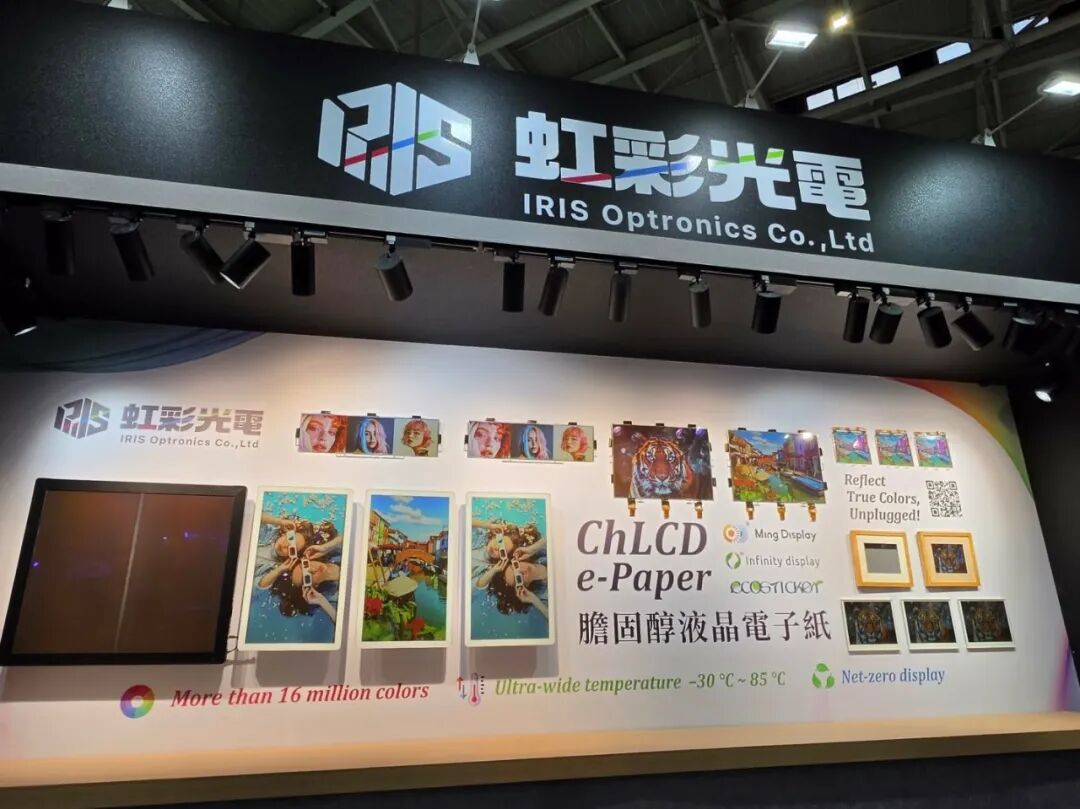
图2. 虹彩光电在2026 Touch Taiwan中展出胆固醇液晶电子纸技术;摄影:北美智权报/吴碧娥
在4月刚结束的2026 Touch Taiwan展会中,电子纸也成为重要的展览主题,虹彩光电等超过20家厂商展示胆固醇液晶技术及多元应用,串联上下游产业伙伴共同呈现创新成果,透过不同技术路线的发展与应用拓展,呈现电子纸在智能城市、智能零售与可持续显示应用上的创新发展,展现台湾地区在电子纸产业链的技术实力。
Original link: https://mp.weixin.qq.com/s/BYvb04MtEoRK-tiax-GCvg
The global breakthrough in artificial intelligence technology is triggering an unprecedented energy crisis. E Ink Corporation Chairman Lee Poh-Hao pointed out during a speech in Taiwan that while the tech industry is obsessed with increasing computing power, it is ignoring the grave reality of energy depletion. Future display technologies should no longer blindly pursue higher brightness and vibrant colors, but instead shift toward extremely low-power, non-glare surface displays. E-paper, with its non-emitting and highly energy-efficient properties, not only significantly reduces the burden on global electrical grids but also serves as a critical solution for advancing global sustainability and addressing the massive energy consumption of AI.
A New Paradigm That Reverses the Traditional Display Industry
As expectations for AI rise, the hidden, massive energy consumption has become a critical issue. At a recent "Cross-Domain Advanced Panel Technology Application Trends Forum" hosted by the Taiwan Display Union (TDUA), Lee shared alarming statistics: within just three years, the energy required for global AI development will be equivalent to Germany's annual total consumption, and by 2031, AI's energy demand will skyrocket to match that of Japan, a high-energy-consumption country. In light of this, he argued that the logic underlying technological development has changed — success no longer depends solely on who can produce 1nm or 2nm chips or advance packaging techniques, but on securing and distributing energy resources. In Taiwan, foundries like TSMC already consume 20% of the nation's electricity. As large data centers and new wafer fabs come online, power shortages will be inescapable, potentially causing a regression to the "Stone Age" of technology if no improvements are made.
Fig. 1. E Ink Corporation Chairman Lee Poh-Hao; Photo: North American Intellectual Property Times / Wu Bi-e
For the past decade, the display industry has allocated 80–90% of its capacity to smartphones, TVs, tablets, and automotive displays, relentlessly pushing for higher brightness and faster refresh rates in LCD, OLED, and micro-LED technologies. However, these direct-light screens not only consume excessive power but are also culprits in modern-day headaches and eye strain. To address this looming energy crisis, E Ink proposes a radical shift: future displays should not be confined to rectangular glowing panels but integrated seamlessly into the surfaces of our environment. By adhering to reflective, paper-like technology that relies on ambient light, E Ink ensures displays can cover expansive areas without causing energy or visual fatigue — paving the way for truly scalable, sustainable digital signage.
E-Paper’s Energy Efficiency Advantage
The energy savings offered by e-paper are overwhelming. For example, replacing 100 or 120 traditional illuminated billboards with e-paper signs results in power consumption comparable to just one conventional board. This advantage allows E Ink to bypass direct competition with LCDs in consumer electronics and instead target the replacement of traditional paper while expanding into retail, transportation, and construction sectors. In retail, E Ink has helped giants like Walmart adopt electronic shelf labels en masse, with sales hitting 500 million units globally in 2025. In transportation, e-paper signs operate entirely off solar power even during blackouts, providing critical information when nothing else does. E Ink has also collaborated with BMW to develop color-shifting car exteriors — white for heat reflection, black for thermal absorption — significantly extending battery life. Looking ahead, E Ink envisions coating large building facades with e-paper, creating energy-saving smart structures that double as high-revenue advertisement platforms. To enable such large-scale applications, future displays will ditch fragile, heavy glass substrates in favor of lightweight plastic, allowing digital information to be affixed to nearly any surface.
As e-paper evolves from black-and-white to full color, its efficiency and market appeal have skyrocketed. Lee highlights how retailers are transforming into "attention-selling" media platforms, where low-power, large-format e-paper signs allow brands to dynamically broadcast promotions in-store. This demand has driven e-paper sizes up from 2 inches to over 15 inches. Moreover, e-paper’s lack of glare and minimal power draw make it ideal for outdoor advertising, where high power consumption often blocks permit approval. Future e-paper billboards can be installed quickly with just a few screws and run independently on solar power — eliminating regulatory hurdles while unlocking untapped revenue potential in the physical world, where digital giants like Google currently have little influence. E Ink offers three platforms to meet diverse needs: Spectra6 (indoor, paper-like texture), Marquee (outdoor durability), and Kaleido (video-rate updates), each opening new business models aligned with modern sustainability goals.
Two Main E-Paper Technologies
E-paper remains the closest technology to real paper in terms of visual quality while offering eye-friendly, energy-saving benefits. The two leading contenders for color e-paper are "Microcup Electrophoretic Ink" by E Ink and "Cholesteric Liquid Crystal Displays" (ChLCD) by companies like Innolux [1].
E Ink’s Microcup technology uses a thin optical film with either microcapsules or microcups containing negatively charged white particles and positively charged black particles suspended in a clear fluid. In black-and-white mode, applying an electric field moves the appropriate particles to the top of the capsule, creating white or black pixels. For color, multiple particle types are used, each with a specific charge level allowing precise positioning within the cup to form visible colors [2].
Innolux’s ChLCD technology, showcased at Touch Taiwan 2026, features a three-layer reflective setup that exploits the bistable nature of cholesteric liquid crystals — meaning the display retains its state without constant power until a new image is written. This results in ultra-low power consumption. The optimized design allows update times under 1 second, and the reflective mode reduces blue light exposure, making it safer for eyes even outdoors. Operating from -30°C to 85°C, it’s suitable for harsh environments like poles or deserts. The stacking of red, green, and blue layers enables over 16 million colors, providing true full-color capability alongside energy conservation [3].
Fig. 2. Innolux showcases its ChLCD e-paper technology at Touch Taiwan 2026; Photo: North American Intellectual Property Times / Wu Bi-e
The 2026 Touch Taiwan exhibition highlighted e-paper as a key theme, with over 20 exhibitors including Innolux demonstrating ChLCD developments and diverse applications. This collaboration across the supply chain underscores Taiwan’s leadership in e-paper R&D, driving innovation in smart cities, retail, and sustainable displays — proving that e-paper is not just a niche product but a cornerstone of future energy-efficient technology.