
原文链接:https://mp.weixin.qq.com/s/tLpicwYNe23WvRYcx1XfrQ

Original link: https://mp.weixin.qq.com/s/tLpicwYNe23WvRYcx1XfrQ
Tony Fadell is often regarded as the “father of the iPod” and was instrumental in Apple’s resurgence from its low point. He was also deeply involved in the development of the first few generations of the iPhone and, after leaving Apple, transformed the otherwise mundane product “thermostat” into a work of art, becoming a pioneer in smart home technology.
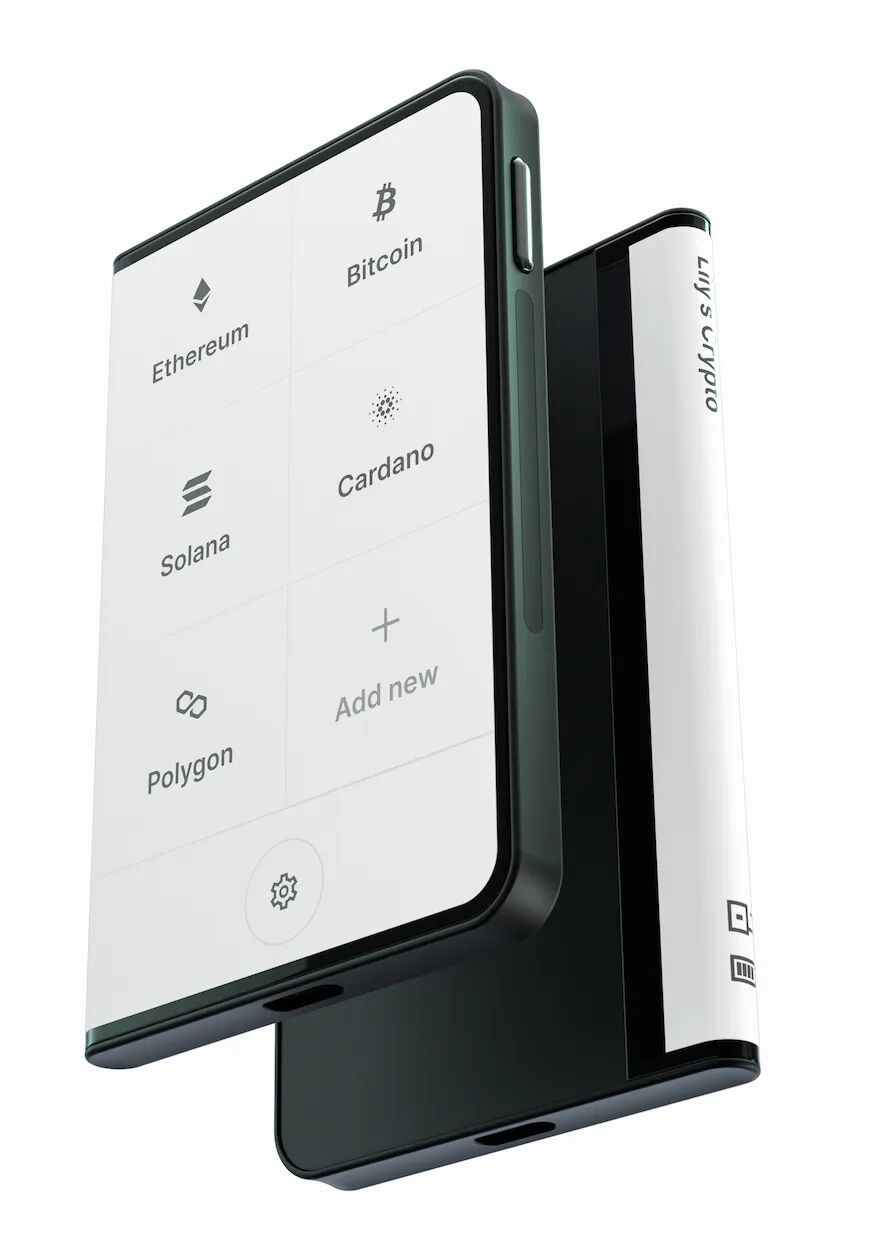
His portfolio is impressive, featuring innovative products across diverse fields. Surprisingly, amid this variety, Tony Fadell’s oeuvre includes a product with an e-ink screen: the Ledger cryptocurrency wallet, Ledger Stax. This device features a flexible display and has a unique appearance. It is reported that the design of another Ledger wallet, the Flex, is also attributed to him.
Ledger Stax
Using e-ink for a cryptocurrency wallet is functionally irrational. The key characteristics of e-ink — low durability, high ghosting, and high latency — are antithetical to the requirements of a secure digital hardware device. However, this contradiction in functionality provides a distinct aesthetic appeal; perhaps wrapping “magic paper” around future currency is the least rational form of rationality.
In a previous conversation with a friend, I speculated that the future of e-ink lies in cryptocurrency, not because the two are a match made in heaven (quite the opposite), but because the e-ink industry currently needs to escape the paradigm of “waste recycling” (i.e., finding uses for leftover low-quality screens). The cryptocurrency industry is awash with (seemingly) baseless money, which can be freely spent on (seemingly) pointless projects. Product designers can focus on the product itself, choosing the right screen for the job without compromise.
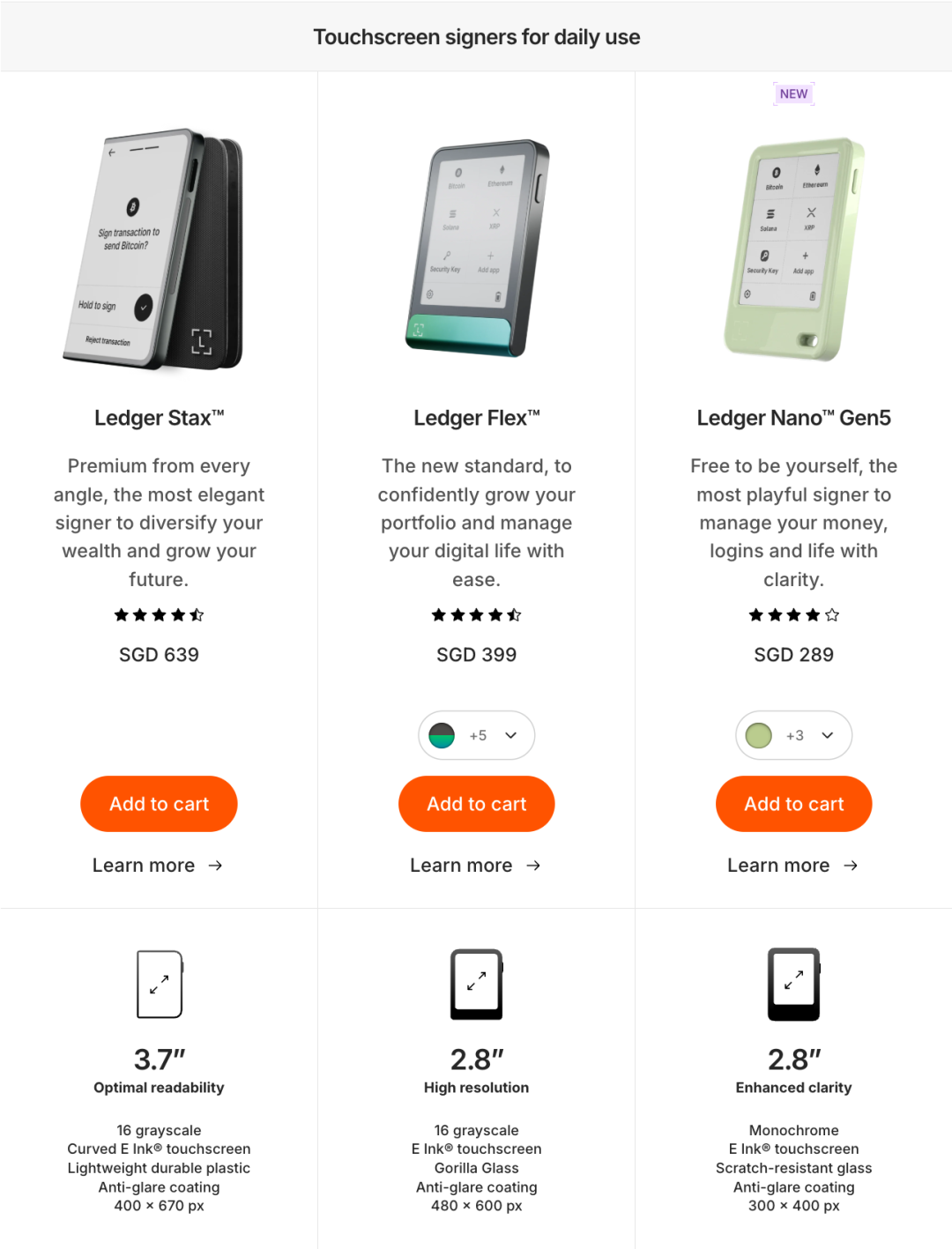
Although I believe tying cryptocurrency hardware products to e-ink screens is a mistake, Ledger has done so without reason, and their current product line includes three e-ink products. Since I'm completely unfamiliar with the crypto industry, I won't analyze their products; I'll just take a visual glance.
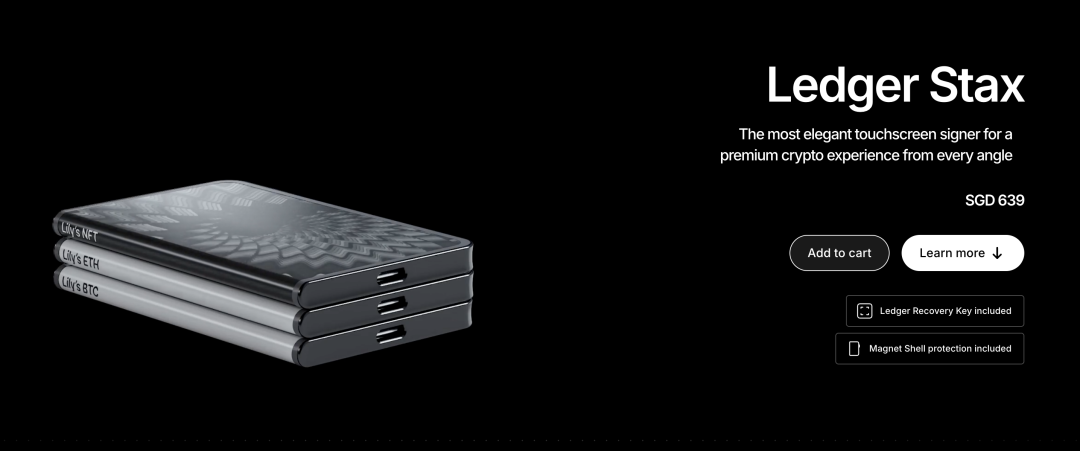
The flagship high-end Stax, priced at 639 SGD (~3428 RMB).
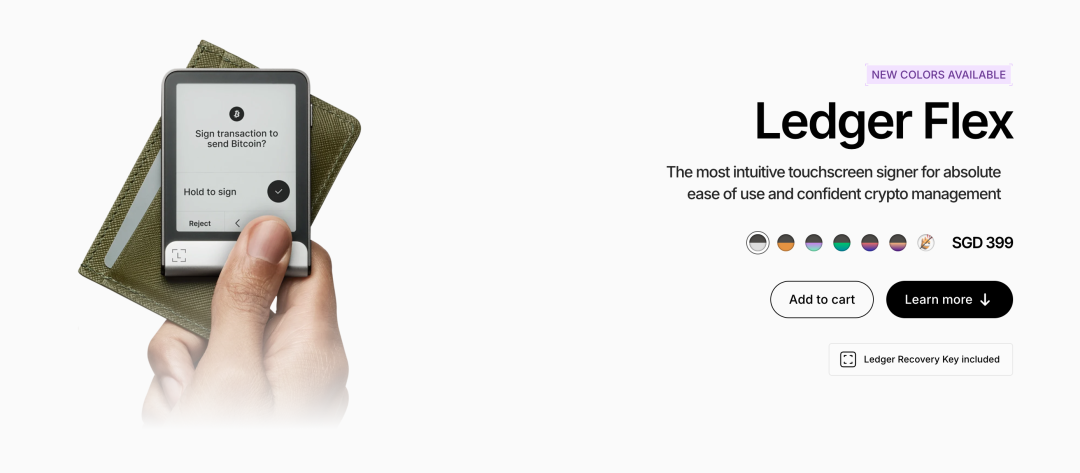
The mainstream product Flex, priced at 399 SGD (~2140 RMB).
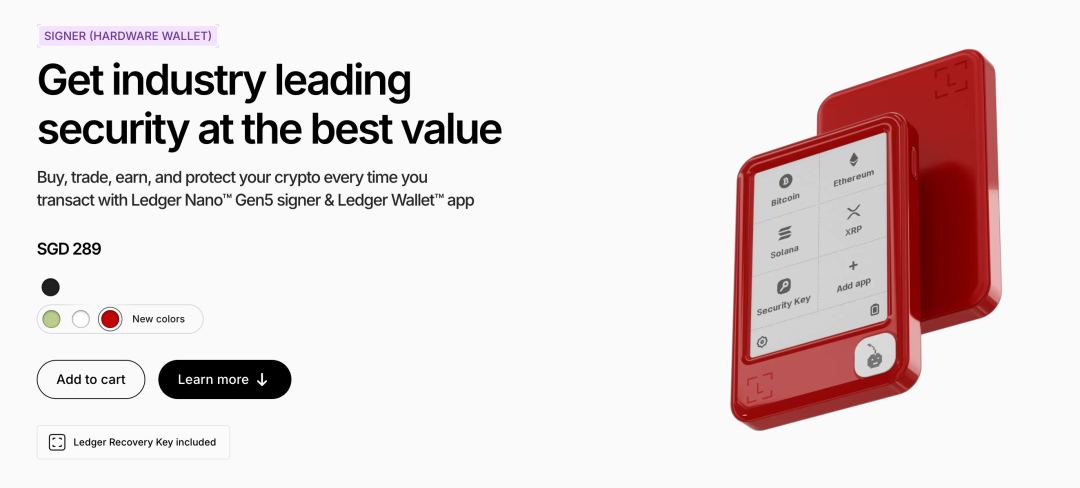
The entry-level Nano, priced at 289 SGD (~1550 RMB).
Ledger even includes the greyscale depth of the e-ink screens in their product specifications, which shows a certain level of technical fidelity. While this is standard practice for e-readers, many other manufacturers overlook this detail.