
原文链接:https://mp.weixin.qq.com/s/6BhD01ZmLwKb9YjEaQFGPw

-
屏幕:10.3 英寸,227PPI,86.3%屏占比,16级硬件灰阶,通过算法实现256级显示效果,哑光屏幕 + 阻尼感类纸书写。 -
性能:麒麟820E(6核),6+128G存储。 -
续航与充电:3625毫安电池,22.5W有线快充。 -
书写:4096级压感M-Pencil磁吸手写笔,26ms延迟。 -
其他:指纹解锁,4 麦克风阵列,双扬声器,360克重量,多设备协同,32级阅读灯亮度调节。
华为还有一个其他品牌没有的优势,就是多屏协同。因为华为的软件在它的生态里可以实现:文件互传、跨屏操作、接续笔记。
|
|
|
|---|---|
| 配置 |
|
| 配件 |
|
| 成色 |
|

Original link: https://mp.weixin.qq.com/s/6BhD01ZmLwKb9YjEaQFGPw
A student asked me whether to buy an ink screen tablet during the 618 sale, and I said no — the answer isn’t among the new releases.
The student’s need is clear: preparing for graduate exams, looking for a 10-inch ink tablet to take notes and annotate PDFs, with a tight budget.
I browsed the new models — all priced around ¥3000–4000, and even 618 discounts won’t lower them significantly (the platforms take too much cut).
As a rule, I rarely review old ink screens — my articles boost resale prices, which contradicts my goal of saving money for readers.
But this student’s request deserves attention. Asking a struggling student to spend ¥3000–4000 on a device is unrealistic.
So I’m breaking my rule to discuss the Huawei MatePad Paper — a former flagship still competitive in the used market.
Launch prices: 4+64GB at ¥2999, 6+128GB at ¥3699, collector’s edition at ¥4999. It’s discontinued now, but left behind a high-quality product.
01
Core specifications of the MatePad Paper
Let’s break down its specs:
- Display: 10.3" diagonal, 227 PPI, 86.3% screen-to-body ratio, 16-level hardware grayscale (with algorithmic 256-level support), matte finish for paper-like writing feel.
- Processor: Kirin 820E (6-core), paired with 6+128GB of storage.
- Battery: 3625 mAh, 22.5W wired charging.
- Writing: M-Pencil with 4096 levels of pressure sensitivity and 26 ms latency, magnetic attachment for charging.
- Other features: Fingerprint unlock, quad microphones for noise suppression, dual speakers, 360 g weight, multi-device collaboration, and 32-level adjustable reading light (cool only, no warm).
Chip and performance
The Kirin 820E is built on 7nm by TSMC, released in January 2021, featuring three A76 cores at 2.22 GHz and three A55 cores at 1.84 GHz, plus a six-core Mali-G57 GPU. This was one of the last high-quality Kirins before the sanctions cut off Huawei’s access to TSMC.
Why does this matter? Most current ink tablets use processors leftover from the mobile industry 5–6 years ago — outdated tech. But the 820E, even today, sits in the top tier of ink tablets — not just good for its age, but good by today’s standards.
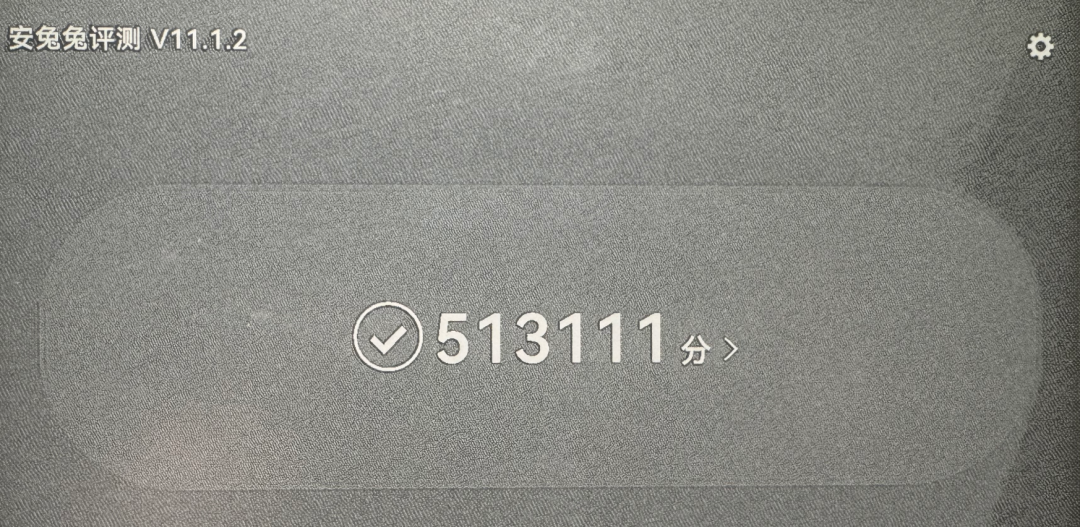
My AnTuTu score was ~510k — beating many modern models unless you’re comparing to specialized behemoths like the Bigme Max. The combination of the chip, ample RAM (6GB was generous for 2022), and HarmonyOS optimization makes this device responsive and usable even now.
Display and writing
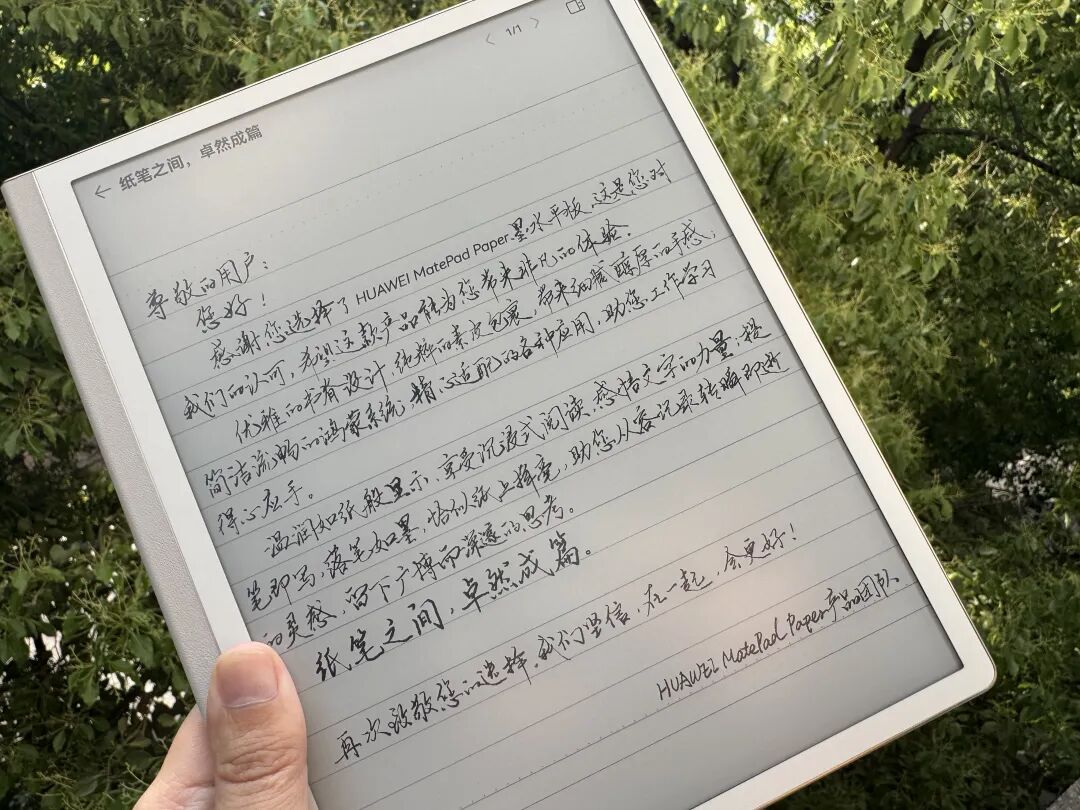
The M-Pencil is reliable — 4096 levels, 26 ms delay, and magnetic charging. While it’s active capacitive (not EMR like Wacom), Huawei’s stroke algorithms ensure smooth, accurate note-taking.
System and ecosystem
The device runs HarmonyOS 2, fully compatible with Android apps — meaning the app market is robust, covering most productivity needs. Crucially, the “multi-device collaboration” feature ties it into the Huawei ecosystem: you can transfer files, control your phone, or continue notes across devices. This isn’t just a tablet — it’s a node in a personal data network.
02
Used market strategy and pricing
For beginners, I don’t recommend jumping straight to eBay-like platforms (e.g., Xianyu). Instead, start with structured marketplaces like Zhuanzhuan — they offer standard valuations, verified grading, and some protection against fraud.
For the MatePad Paper, here’s a rough guide:
- Target configuration: 6+128GB (in White, Blue, or Black), with original M-Pencil AND protective case.
- Condition: Grade A (95+% new) or better.
- Price ceiling: ~¥1300. If it exceeds that, wait for a cheaper listing.
Why insist on the case and pen? Because these are now hard to find separately, and third-party replacements won’t match the quality or fit. Also, the collector’s edition (usually blue or black) often comes with them bundled, so finding a full kit is possible.
Alternative strategy: If you’re willing to accept minor cosmetic flaws — like scratches on the back or sides (not screen) — you can sometimes find units for ¥800–900. With a case on, the imperfections aren’t visible, and you save even more.
For students, I’d still recommend spending the extra ¥300–400 for a cleaner unit. Peace of mind and aesthetics matter when you’re investing in a tool that should last through your graduate studies.
To sum up: in the era of skyrocketing prices and shrinking feature sets, the Huawei MatePad Paper from 2022 stands out as a durable, well-engineered tablet that still competes with today’s mid-range offerings — and is available at a fraction of the cost. That’s why it’s the smart choice for budget-conscious learners during this 618 season.
Now, let's talk about the critical second-hand reference price.
As I mentioned before, beginners looking to buy second-hand should avoid going straight to Xianyu. A more reliable entry point is Zhuanzhuan — the platform provides a unified valuation and offers a quality inspection guarantee, saving you the effort of identifying screen defects or disassembly marks. Paying an extra 100-200 yuan buys you peace of mind: For buying second-hand e-ink devices, Xianyu is only the third choice.
(If you are a veteran Xianyu user, ignore the above comment — you can find lower prices on Xianyu.)
For the MatePad Paper, here is a specific reference:
配置要求
说明
6+128GB(锦白、晴蓝、墨黑均可)
The original protective case and M-Pencil are indispensable accessories.
95新A级以上,或99新
If all three items (device + pen + case) are included, a reasonable price is around 1300 yuan. If it costs more, it’s not worth it — wait until the price drops below 1300 before making a move.
Why emphasize the original case and pen? This device was released in 2022, and standalone replacement parts are now hard to find. Third-party pens may not be fully compatible. It’s better to pay a bit more upfront for a complete set.
再简化一点:
1. Full set (device + pen + original case): ~1300 yuan
2. Device + pen only, no original case: ~1200 yuan
There is also a way to snag a bargain: Devices with intact screens but scratches or dents on the sides or back can be found in the 800–900 yuan range. Once you put the protective case on, the back is covered, and side damage is barely noticeable — offering excellent cost-effectiveness.
However, for students, I personally recommend spending an extra 200–300 yuan to get a device in 95% new condition with a good appearance.
This is hard-earned money — having a device you’re happy to look at is worth more than saving a few bucks.
Finally, the reason I’m including this in a 618-themed article: I’ve checked the prices of several new 10.3-inch models this year — they’re all around 3000–4000 yuan, and even during 618, discounts are minimal.
For those on a tight budget, it’s better to choose a second-hand flagship from a couple of years ago rather than settling for a low-end new model.
The MatePad Paper remains the best value in this price range, even in 2026.